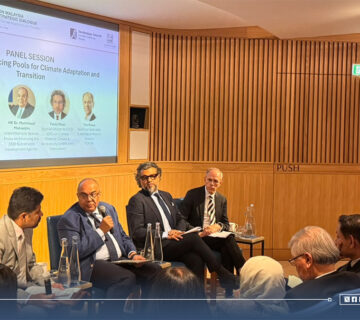

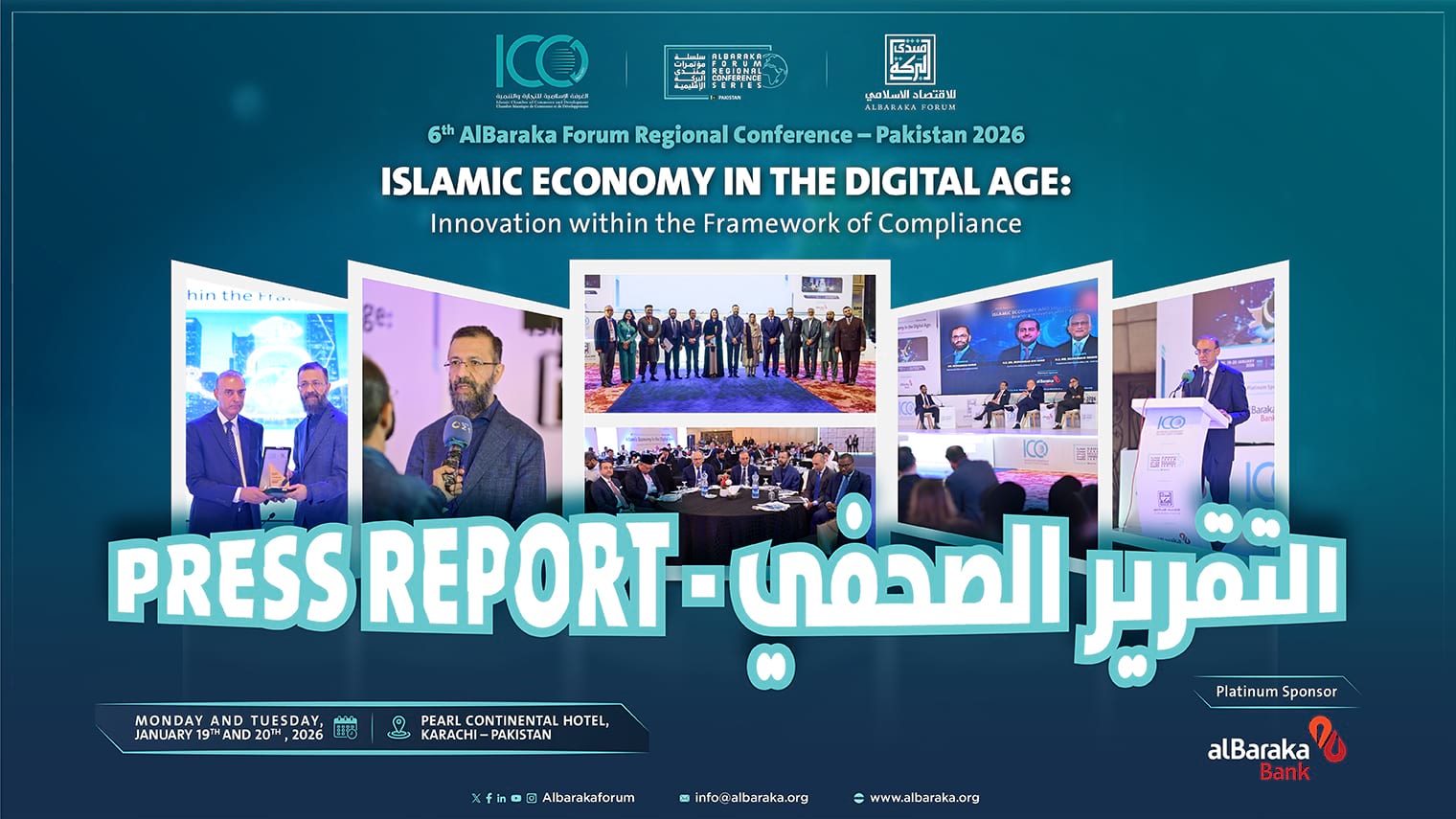
The 6th AlBaraka Forum Regional Conference – Pakistan commenced in Karachi on Monday and Tuesday, 19th and 20th January 2026, under the theme “Islamic Economy in the Digital Age: Innovation within the Framework of Compliance.” The conference was held at Pearl Continental – Karachi, in Collaboration with the Islamic Chamber of Commerce & Development (ICCD), with Platinum Sponsorship from Al Baraka Bank Pakistan Ltd., and brought together senior policymakers, regulators, banking leaders, Shariah experts, scholars, and technology experts.
Day one 19th January 2026
Opening Ceremony
The Conference commenced with welcoming remarks by the MC, Ms. Sidra Iqbal, International TV Presenter & Journalist, who highlighted Pakistan’s growing role in the Islamic economy, noting that Islamic banking assets have reached USD 25.98 billion and that the country ranks 9th globally in Islamic Fintech, reflecting a strong shift toward digital, Shariah-compliant innovation. Following that, Mr. Hafiz Muhammad Saad, Business Planning Manager at Al Baraka Bank Pakistan, recited verses from Surah Ar-Rahman, creating a reflective and uplifting atmosphere for the conference proceedings.
H.E. Mr. Yousef Hassan Khalawi, Secretary General of AlBaraka Forum for Islamic Economy, focused on the strategic importance of digital transformation for the future of Islamic finance, emphasizing that the digital age represents a unique opportunity for Islamic banking to compete on equal footing with conventional banking, as both sectors are undergoing digital transformation simultaneously, also stressing confidence in Karachi’s capacity and potential, the rising hub and the third capital of Islamic finance in Asia, capable of serving a vast population and economic landscape, noting: “The digital economy gives Islamic finance a historic opportunity to stand on the same stage as conventional banking”.
In his keynote address, H.E. Mr. Jameel Ahmad, Governor, State Bank of Pakistan, underscored that digital innovation should be viewed as a tool to achieve broader socioeconomic goals rather than an end in itself, his excellency stressed that technology adoption in Islamic finance can significantly enhance financial inclusion, reduce costs, and overcome geographic barriers, while supporting Pakistan’s transition toward Sharia-compliant financial models, referring to SBP’s Vision 2028, which outlines a clear roadmap for strengthening the digital payments ecosystem and advancing Islamic banking in Pakistan, stating: “Digital innovation must serve inclusion, efficiency, and real economic impact”.
Opening Ceremony – Honorary Recognitions
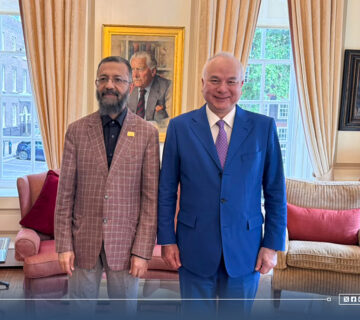
At the conclusion H.E. Mr. Yousef Khalawi, honored the Chief Guest of the conference, H.E. Mr. Jameel Ahmad, Governor, State Bank of Pakistan, in recognition of his leadership role and continued support for the development of Islamic finance and digital transformation in Pakistan.
Following this, H.E. Mr. Jameel Ahmad, together with H.E. Mr. Yousef Khalawi, honored the Platinum Sponsor of the Conference, Al Baraka Bank Pakistan Ltd., represented by H.E. Mr. Muhammad Atif Hanif, Chief Executive Officer, Al Baraka Bank Pakistan, in appreciation of the bank’s continued support and contributions to the success of the conference.
First Session: “Islamic Economy and Digital Disruption: Balancing Innovation with Tradition”.
The first session was moderated by Mr. Mohammad Shoaib, Chief Executive Officer, Lucky Investments Limited, who framed the discussion around the central challenge facing Islamic finance today, not whether technology should be adopted, but how innovation can be aligned with tradition in a way that preserves Shari’ah integrity, strengthens public trust, and delivers tangible economic impact.
During the session, H.E. Mr. Muhammad Atif Hanif, emphasized that digital innovation in Islamic banking should go beyond merely automating conventional products, stressing the importance of leveraging technology to design genuinely Shari’ah-compliant products and services that reflect the true objectives of Islamic finance, “Innovation must serve Shari’ah, not simply replicate conventional banking in digital form,” his excellency noted.
H.E. Mr. Muhammad Nassir Salim, President and Chief Executive Officer, HBL – Habib Bank Limited, highlighted the significant financing gap in Pakistan’s agricultural sector, noting that the banking industry currently fulfills less than ten percent of total agri-financing needs, explaining that digitization enables banks to scale agricultural financing rapidly, reach underserved communities, and support productivity across rural economies.
H.E. Mr. Zafar Masud, Chairman, Pakistan Banks’ Associations, President and Chief Executive Officer, The Bank of Punjab, emphasized that Islamic banking should be viewed as a core driver of financial inclusion rather than merely an alternative banking model, noting the growing public inclination toward Islamic banking, particularly among individuals currently excluded from the formal financial system.
The session concluded with H.E. Mr. Yousef Khalawi, Secretary General of the AlBaraka Forum for Islamic Economy, honoring the panelists in recognition of their contributions.
Second Session: “Digital Islamic Banking: Opportunities and Regulatory Challenges”
The second session was moderated by Dato’ Ts. Dr. Haji Amirudin Abdul Wahab, Chief Executive Officer, CyberSecurity Malaysia, who guided discussions on how banks are navigating the shift toward digital platforms while balancing regulatory requirements with rising customer expectations for innovation. The session explored emerging opportunities in digital Islamic banking alongside the critical challenge of maintaining Shari’ah compliance in an increasingly complex digital environment.
Mr. Ahmed Ali Siddiqui, SEVP and Group Head of Shari’ah Compliance, Meezan Bank Limited, highlighted the rapid transformation of Pakistan’s banking landscape, noting that more than 90% of retail transactions are now conducted through digital channels, predominantly via mobile platforms. He emphasized that strong digital frameworks can enable Islamic banks to scale efficiently, enhance customer experience, and expand nationwide outreach.
Focusing on the practical application of artificial intelligence, Mr. Ashar Nazim, Founder and Chief Executive Officer, Aion Digital, explained how machine learning and data-driven models are transforming risk assessment and unlocking productive capital for business financing. He highlighted the potential of AI-powered systems to improve efficiency, support economic growth, and generate employment across the financial ecosystem.
Addressing customer onboarding and trust, Mr. Mohammad Anwar Khan, Founder and President, Pak Angels, emphasized the importance of seamless e-KYC processes, generative AI, and unified communication platforms in expanding Shari’ah-compliant digital finance. He noted that mobile-based solutions, consumer education, and low-cost digital payments can significantly accelerate financial inclusion and support small and medium enterprises.
Looking ahead to the future of digital Islamic banking, Mr. Zohair Saif, Group Head Digital Banking, AlBaraka Bank Pakistan, highlighted the industry’s shift from monolithic core banking systems toward modular, API-driven architectures. He stressed the importance of embedding Shari’ah governance throughout the product lifecycle, alongside regulatory collaboration, transparency, and cross-border connectivity to unlock Pakistan’s full digital banking potential.
Third Session: “Shari’ah Compliance and Governance in the Digital and Non-Profit Economies”
The third session was moderated by Prof. Dr. Imam Uddin, Director, Centre for Islamic Business and Finance, Institute of Business Management, Karachi, who highlighted the expanding role of digitalization across finance, Zakat, Waqf, governance, and trust. He framed the discussion around the challenge of preserving Shari’ah ethics and robust governance in an increasingly fast-evolving digital landscape.
During the session, H.E. Mufti Dr. Irshad Ahmad Aijaz, Chairman, Shari’ah Advisory Committee, State Bank of Pakistan, emphasized that strong Shari’ah governance, internal controls, and audit mechanisms are essential as Islamic finance adopts digital innovation, fintech solutions, and digital assets. He stressed that noble intentions must be matched with transparency, accountability, and effective regulatory oversight.
Drawing on Malaysia’s experience, Prof. Azman bin Mohd Noor, Professor in Islamic Jurisprudence, Department of Fiqh and Usul al-Fiqh, International Islamic University Malaysia, highlighted how fintech and digital innovation can significantly expand cash Waqf collection and impact. He emphasized that modern technologies, combined with strong Shari’ah governance and diversified investment instruments, can preserve Waqf capital, generate sustainable returns, and enable broader community participation through accessible contribution models.
H.E. Dr. Umar A. Oseni, Secretary General, The Organization of Islamic Cooperation Arbitration Centre, focused on the regulatory implications of rapid digital innovation in the Islamic economy, highlighting challenges related to cross-border transactions, regulatory fragmentation, and the need for unified Shari’ah governance, calling for greater cooperation, mutual recognition frameworks, and robust oversight to ensure transparency, compliance, and trust.
Highlighting the role of digitalization in restoring trust in Zakat and Waqf systems, Dr. Shafiullah Jan, Tenured Professor, Institute of Management Sciences Peshawar, emphasized the urgent need for legal reforms, standardized Shari’ah interpretations, smart contract frameworks, and robust data protection laws to support credible, technology-driven Islamic social finance.
Insightful Address: “From Assets to Tokens: Redefining Money in the Islamic Digital Economy”
Engr. Naeem Ilyas Khanani, Chief Executive Officer, DigiEstate (Pvt.) Ltd, delivered his address focusing on the redefinition of money in the digital age, exploring the foundations of tokenization and cryptography, and examining the Shari’ah basis of tokenized money through the lenses of Fiqh and Maqasid al-Shari’ah. He also discussed the emergence of tokenized Sukuk, new digital instruments, and currencies, and their implications for the future of Islamic finance.
Leadership Talk: “Embracing Regional’s Sustainable Future: Pakistan’s Leadership in Shari’ah Compliant ESG Indexing”
The Leadership Talk was moderated by H.E. Mr. Faraz Khan MBE, Co-Founder & Partner, Spectreco, who steered an in-depth discussion on sustainability, intergenerational wealth transfer, and ESG as a key driver of future investment and consumption patterns, emphasizing on the growing importance of sustainability in business succession, capital allocation, and trade finance, encouraging Pakistani institutions to align family businesses, exports, and climate strategies with global ESG expectations.
H.E. Mr. Muhammad Atif Hanif, Chief Executive Officer, Al Baraka Bank Pakistan, outlined the bank’s approach to embedding sustainability by aligning ESG principles with Maqasid al-Shari’ah, sharing practical initiatives including family business succession advisory, green banking compliance, large-scale plantation drives, Shari’ah-compliant cross-border trade finance, and sustainable tourism promotion, also highlighting Pakistan’s untapped potential in climate finance and stressed the importance of developing bankable green projects to address climate risks while supporting exports and long-term economic resilience.
Day Two 20th January 2026
Institutional Workshop: “Technicalities of Takaful in the Digital Revolution” – by Salaam Takaful Limited
The workshop was presented by Mr. Nayyar Hussain, Senior Executive Director, Salaam Takaful Limited, who highlighted how Digital Takaful is transforming the industry by replacing traditional processes with a fully digital, customer-centric model. He explained that technology enables seamless policy issuance, contribution collection, and claims processing without physical documentation, making Takaful more efficient, transparent, and accessible to digitally driven customers.
Institutional Workshop: “The Developmental Revolution of Islamic Economy Institutions through Technology and Innovation” – by Hijra Bank – Indonesia
This workshop was presented by Mr. Mochamad Nizar Mustaqim, General Director, Hijra Bank – Indonesia, who discussed how technology is reshaping Islamic economic institutions by enhancing efficiency, scalability, and institutional resilience. He emphasized that digital transformation enables Islamic banks to move beyond traditional models and play a stronger developmental role in building inclusive and sustainable Islamic economic systems.
Workshop: “Demographic Growth and Islamic Economic Expansion: New Horizons” – by AlBaraka Forum’s Strategic Thinking Center
The workshop was presented by Dr. Eman Shady, Executive Secretary at the Strategic Thinking Center for Islamic Economy, who explored how rapid growth in the Muslim population is creating new opportunities for Islamic finance, halal industries, and Shari’ah-compliant services. She highlighted the importance of understanding demographic trends to expand market size, stimulate investment, and support sustainable economic growth across both Muslim and non-Muslim countries.
Special Note: “The Evolution of Financial Fatwas in Islamic Banks Toward Enabling Green Economic Strategies”.
In a special note, Mr. Muhammad Khalid Hasani, Member Shari’ah Board, Al Baraka Bank Pakistan, highlighted the evolution of Islamic financial fatwas from a purely compliance-driven approach toward a Maqasid-based framework. He emphasized the role of Shari’ah guidance in enabling sustainable and green economic strategies by aligning financial innovation with ethical impact, environmental responsibility, and the long-term objectives of Islamic finance.
The conference underscored the need for Shari’ah-compliant digital innovation. It reinforced Pakistan’s position as an emerging hub for the Islamic digital economy.